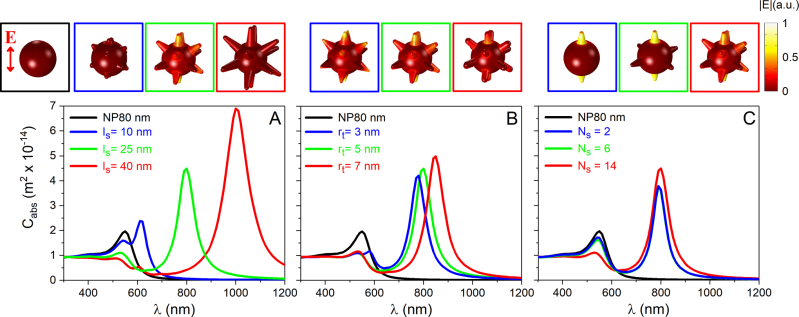
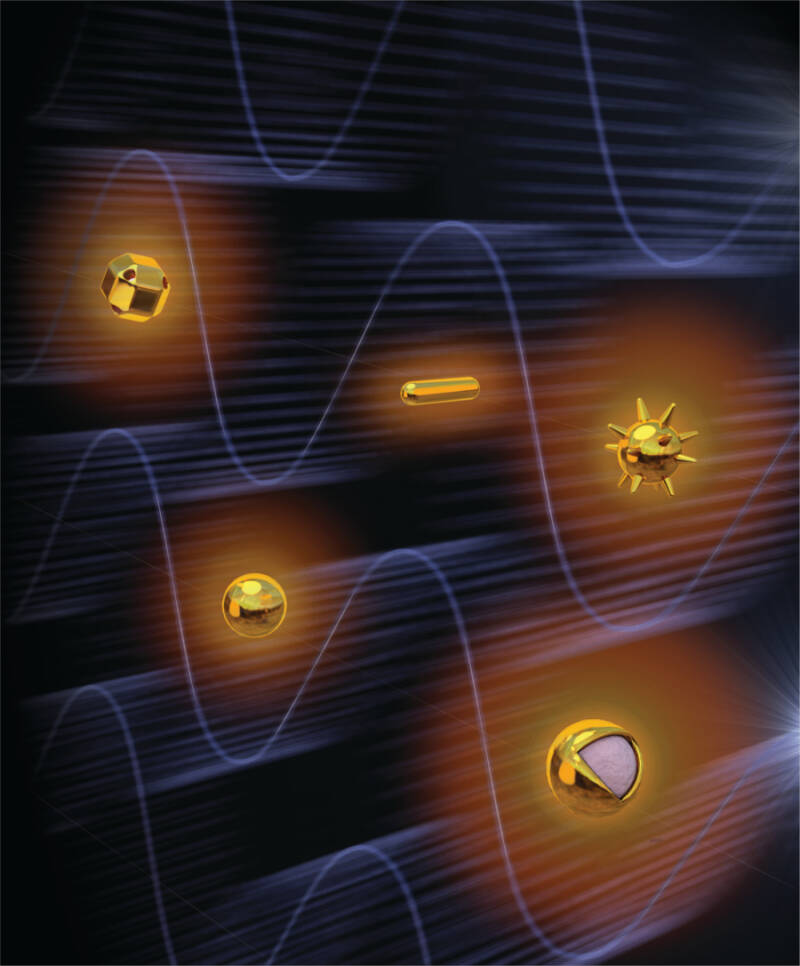
Thermoplasmonics: optical heating generated by irradiated plasmonic nanostructures
Thermoplasmonics for membrane fusion and membrane repair
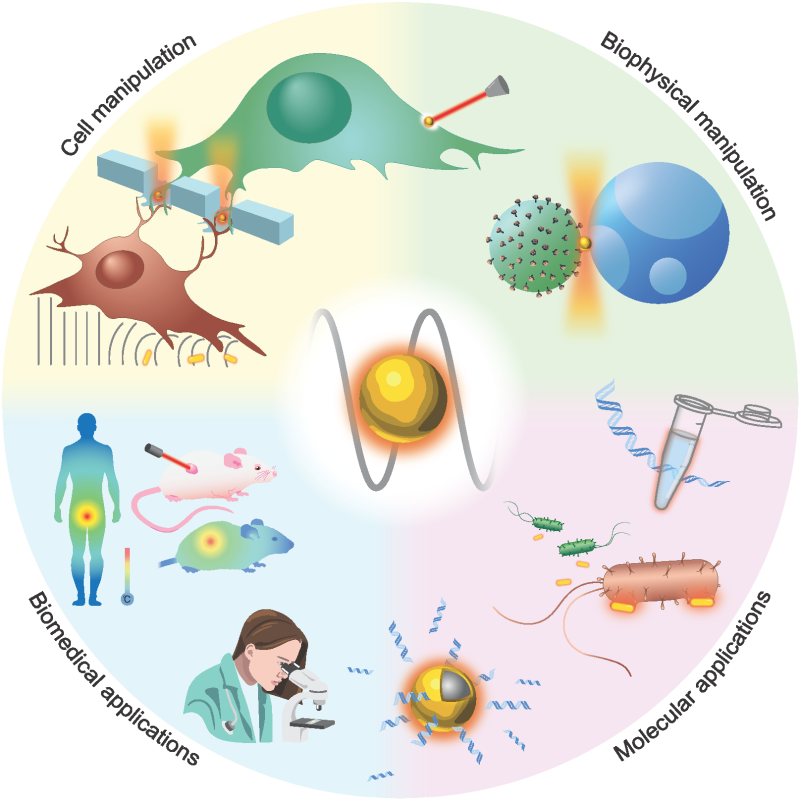
We use light-heated nanoparticles to manipulate membranes and living cells with spatially localized thermal perturbations. This approach, known as thermoplasmonics, connects nanoscale optical heating with experimental membrane biology.
Our research includes the characterization of nanoparticle heating and the development of methods for controlled membrane damage, vesicle fusion and local changes in membrane phase behavior.
By combining thermoplasmonic manipulation with fluorescence microscopy, we can observe how membranes and associated proteins respond to a defined perturbation. Applications include investigating plasma-membrane repair, studying protein organization in membranes, and engineering interactions between synthetic vesicles and cell-derived membranes.
We develop these methods both as tools for biological discovery and as a way to investigate the physical processes underlying membrane remodeling.
- Nano Letters Review (2024), Ruhoff et al.
- JOVE (2024), Danielsen et al.
- Nano Letters (2023) Ruhoff et al.
- Nanoscale (2022), Moreno-Pescador et al.
- Chemical Reviews (2019), Jauffred et al.
- Sci. Rep. (2016), Norregaard et al.
- Nano Letters (2015), Rørvig-Lund et al.
- ROPP (2017), Bahadori et al.
- ASC Nano (2010), Bendix et al.
- Nano Letters (2005), Hansen et al.