Filopodia rotation and twisting
Active surface protrusions emanating all from cells

Active Matter Dynamics & Filopodia Mechanics: Rotation Twisting and Force Generation
We investigate how actin-driven filopodia generate forces and explore the cellular environment. These slender membrane protrusions connect cytoskeletal dynamics inside the cell with mechanical interactions at its surface.
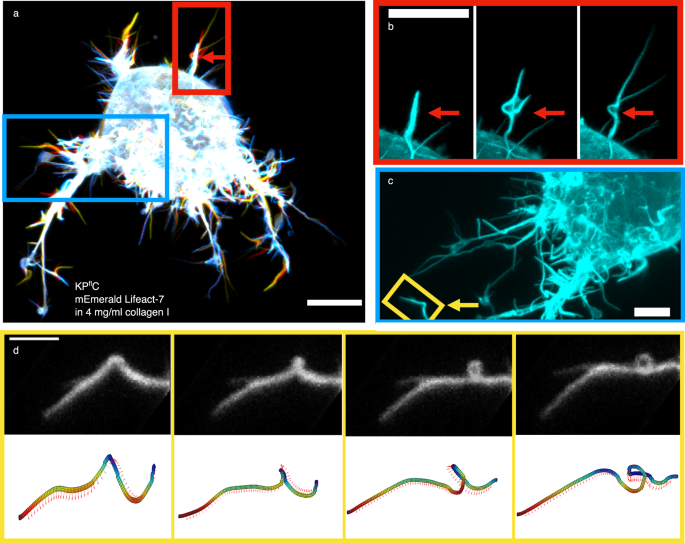
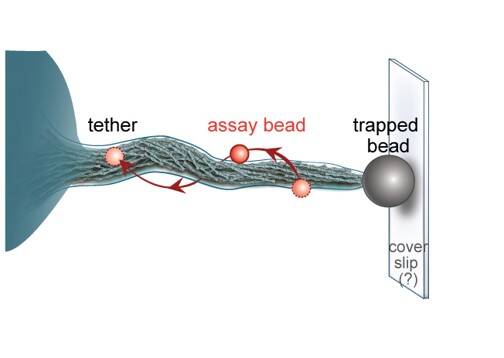
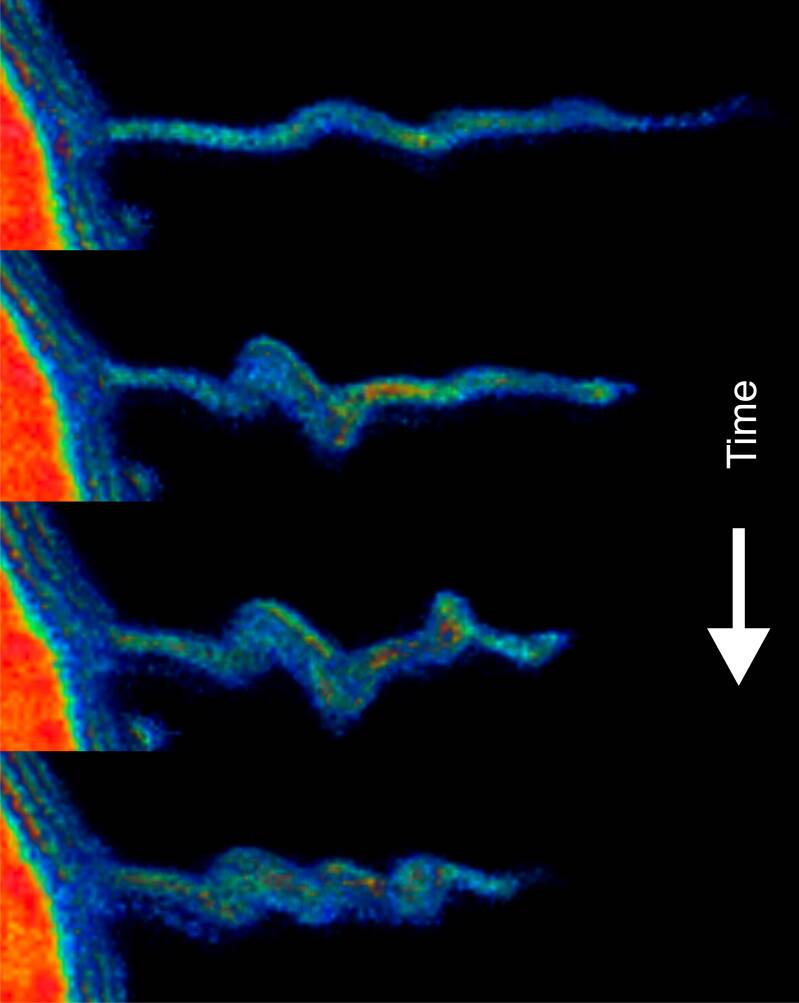
Our work combines optical tweezers, three-dimensional confocal microscopy and theoretical modeling to relate filopodial motion to actin-bundle organization. We study rotation, twisting, helical buckling and retraction, and examine how these processes contribute to force generation.
Our studies have shown that filopodia can rotate and coil as an active matter through active twisting of their actin shaft, and that helical buckling of actin can generate traction. These findings motivate a view of filopodia as dynamic mechanical structures rather than passive cellular antennae.
We are interested in how this mechanical activity contributes to environmental exploration and cell–environment interactions.
- Nature Communications, 2022, Leijnse et al. https://doi.org/10.1038/s41467-022-28961-x
- PNAS 2015, Leijnse et al. https://doi.org/10.1073/pnas.1411761112
- Review in TCB : Ruhoff et al. 2025 https://doi.org/10.1016/j.tcb.2024.05.005
- Review in Cytoskeleton 2015 Leijnse et al. https://doi.org/10.1002/cm.21216